

Lighting design is a foundational component in shaping the emotional, perceptual, and operational qualities of contemporary entertainment environments. Within amusement venues, it influences far more than visual appeal. It governs atmosphere, directs attention, supports safety, and reinforces a park’s thematic identity. From the soft glow surrounding a carnival carousel to the kinetic radiance projected across a swing tower, lighting orchestrates how visitors interpret and remember their experience. Its impact is both immediate and cumulative, creating a sensory landscape that elevates even the simplest attraction into a memorable encounter.
1. The Psychological Power of Light
Lighting communicates mood with remarkable efficiency. Warm hues create comfort and nostalgia, while saturated blues or purples introduce mystery and spatial depth. Sharp contrasts can provoke excitement; diffuse luminosity can calm a restless crowd. In environments filled with movement—such as ferris wheel rides or high-energy thrill attractions—the human eye depends on lighting cues to establish orientation and anticipate transitions.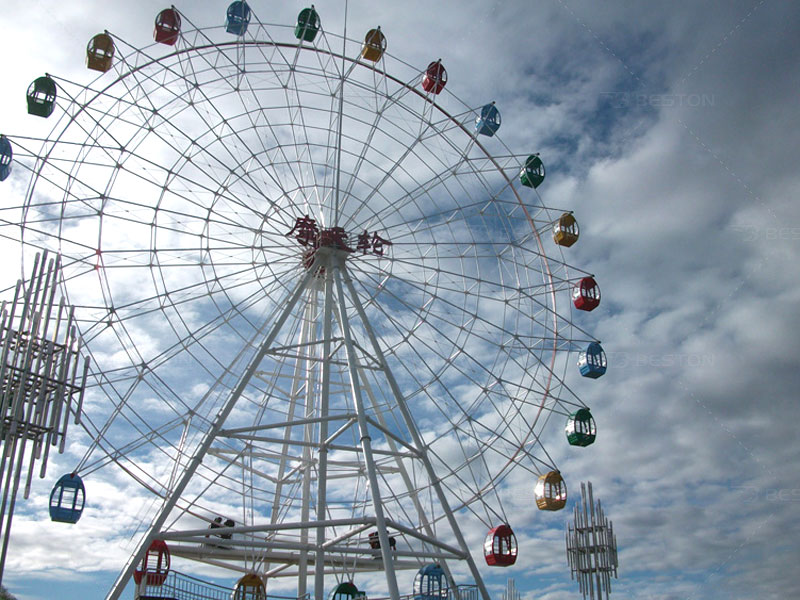
A single beam can highlight architectural detail, frame a thematic sculpture, or intensify anticipation before a ride sequence begins. When applied strategically, lighting becomes a form of emotional engineering, shaping visitor expectations before any motion occurs. It allows designers to manipulate perceived scale, slow or accelerate visual rhythms, and craft zones of intimacy even within expansive outdoor settings.
2. Enhancing Thematic Cohesion
Modern entertainment venues rely heavily on narrative theming. Lighting is the connective tissue that stabilizes a theme across varied physical structures. It harmonizes color palettes and reinforces story elements embedded in set pieces, ride façades, and queue environments.
For a carnival carousel, lighting is more than decoration—it is identity. The incandescent halo circling its canopy, the prismatic reflections on mirrored panels, and the rhythmic pulse synced with traditional organ music work together to communicate familiarity. In contrast, a swing tower depends on vertical beams and radial strobes that accentuate its height and rotational velocity. Light not only accompanies the motion; it amplifies it.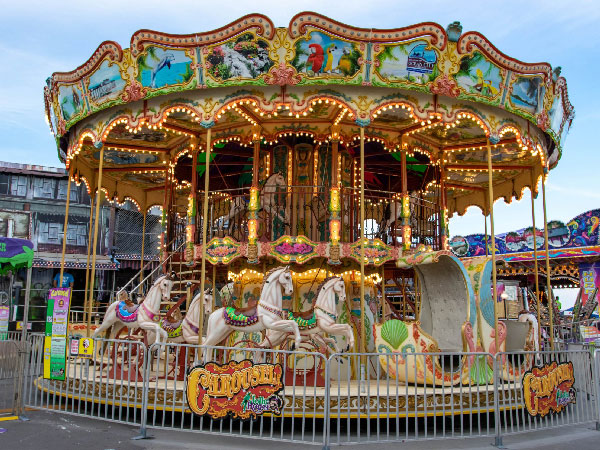
The design language of each attraction is supported by luminance signatures that visitors subconsciously recognize. This is especially important for amusement rides for sale that must integrate seamlessly into parks with pre-existing themes. Manufacturers increasingly design lighting systems that are modular, programmable, and stylistically adaptable, empowering operators to customize ambiance without architectural modification.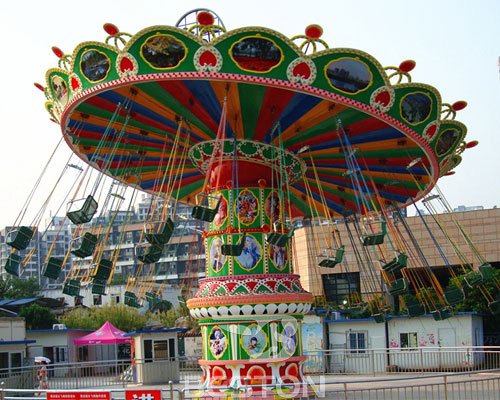
3. Directing Attention and Guiding Movement
Crowd management depends on visual clarity. Lighting helps visitors understand spatial boundaries, interpret circulation routes, and identify ride entrances or safety zones. Soft perimeter glows, illuminated railings, and synchronized pathway markers reduce confusion, especially in high-density evening operations.
Swing tower demonstrates this principle effectively. The luminous spokes and rotating patterns not only captivate audiences but also guide them toward the loading platform. The glow distinguishes access points, reduces hesitation, and allows staff to maintain smoother throughput. Similar strategies are used in queue corridors, where gradient color shifts help passengers naturally progress forward without verbal instruction.
Lighting also enhances safety compliance by emphasizing critical warnings or operational phases. Flash sequences can signal loading procedures, start delays, or emergency protocols. This visual communication is especially important in outdoor environments where noise levels fluctuate and public address systems may not be fully effective.
4. Elevating Immersive Ride Experiences
The ride experience is increasingly reliant on dynamic lighting systems synchronized with movement, audio, and mechanical triggers. Integrated LEDs, projection mapping, and gobo effects expand the creative vocabulary available to designers.
On a swing tower, perimeter lighting strips can simulate wind streaks, while overhead fixtures cast evolving chromatic patterns that generate a sensation of velocity. These layered effects transform a mechanical rise-and-spin motion into a multisensory spectacle.
Similarly, ferris wheel rides benefit from programmable illumination arrays capable of displaying geometric animations, seasonal motifs, or even brand-specific patterns. The lighting extends the visual reach of the ride beyond the immediate park boundary, becoming a landmark that enhances the night-time skyline.
For smaller attractions, particularly amusement rides for sale targeted at family-friendly zones, lighting helps bridge the gap between mechanical simplicity and experiential richness. A modest ride can appear premium when complemented by atmospheric lighting that responds subtly to user interaction.
5. Adaptive and Energy-Efficient Systems
Technological advancements have transformed lighting design from a static feature into a responsive system. Intelligent fixtures equipped with sensors, automated dimmers, and wireless controllers allow operators to modify light levels in real time based on crowd density, weather, or thematic programming.
Energy-efficient LED technology has also reduced power consumption without compromising luminance intensity or color fidelity. Parks can maintain extensive nighttime operations while controlling operational costs and extending fixture lifespan. Maintenance crews benefit from modular components that simplify repairs and replacements.
The shift toward data-driven lighting systems introduces new opportunities for personalized guest experiences. Zones can react to user movement, rides can shift color temperature according to time of day, and shows can integrate lighting as part of synchronized multimedia performances.
6. Strengthening Brand Identity and Market Appeal
Lighting design plays a critical role in shaping a park’s public image. Nighttime photography—whether captured professionally or posted by visitors on social media—often emphasizes lighting aesthetics. A beautifully illuminated ferris wheel or a radiant carnival carousel becomes instantly shareable content, contributing to organic marketing.
For operators purchasing new amusement rides for sale, customizable lighting packages are now a major competitive feature. Programmable patterns allow a park to showcase seasonal themes, holiday colors, or promotional events. A single attraction can express multiple identities throughout the year, extending its marketing lifespan and increasing ROI.
Lighting transforms the park environment into a brand canvas. Whether glowing gently or erupting into dazzling light displays, illumination defines how visitors remember the space long after their visit.
Conclusion
Lighting design is more than a technical necessity in entertainment environments—it is a strategic asset. It shapes emotion, enhances safety, supports thematic coherence, and elevates even simple attractions into compelling visual experiences. Whether illuminating a classic carnival carousel, outlining the silhouette of a ferris wheel, or emphasizing the height of a swing tower, lighting is an indispensable tool in crafting memorable amusement environments.
Through deliberate design and technological integration, lighting becomes a silent partner in storytelling, guiding visitors through moments of joy, anticipation, and awe. Its role continues to expand as the industry embraces adaptive systems and immersive design philosophies, ensuring that illumination remains at the forefront of experiential innovation.